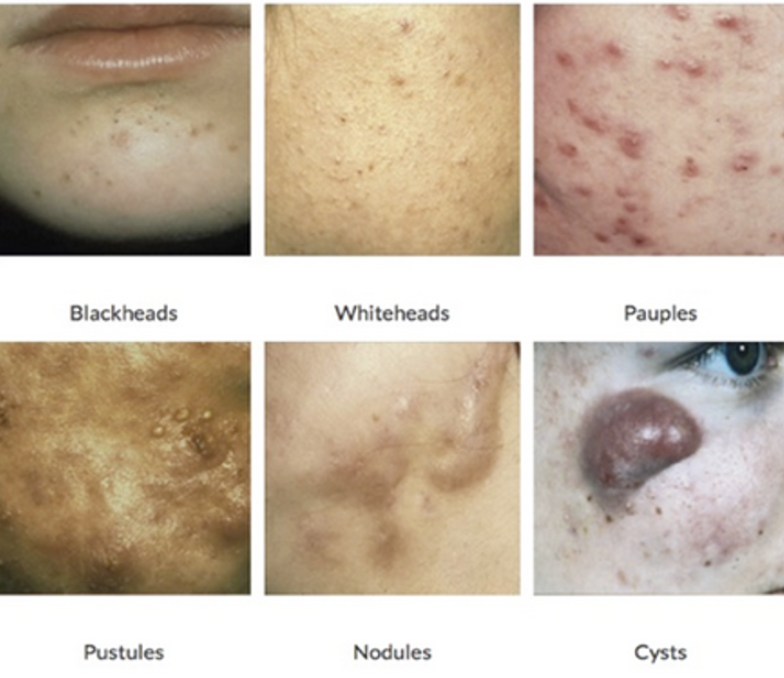
Non-Inflammatory Acne
These types are not typically red or swollen and are the mildest forms of acne.
Blackheads (Open Comedones): These are pores that are clogged with oil and dead skin cells but remain open at the surface. The contents oxidize when exposed to air, giving them a dark, black appearance. They are not a sign of poor hygiene.
Whiteheads (Closed Comedones): These are pores that are also clogged with oil and dead skin cells, but they are covered by a thin layer of skin. This prevents the contents from oxidizing, so they appear as small, white or flesh-colored bumps under the skin's surface.
Inflammatory Acne
These types of acne are caused by the presence of bacteria, leading to a more severe, inflamed response.
Papules: These are small, red, and tender bumps that form when a clogged pore becomes irritated and inflamed. They do not contain pus.
Pustules: Often mistaken for pimples, these are red, inflamed bumps with a visible white or yellow pus-filled center. They are caused by a buildup of pus from a bacterial infection in the pore.
Nodules: These are large, painful, solid lumps that form deep beneath the skin's surface. They are a more severe form of inflammatory acne and do not typically contain pus. They can persist for a long time and often lead to scarring.
Cysts: This is the most severe type of acne. Cysts are large, soft, and painful lumps that are filled with pus. They are deep within the skin and can cause significant pain and scarring.
Acne
Acne is a common skin condition that occurs when hair follicles become clogged with oil and dead skin cells. It typically manifests as pimples, blackheads, whiteheads, or cysts and commonly affects areas of the skin with a high concentration of oil glands, such as the face, chest, back, and shoulders.
Here are some key characteristics of acne:
Types of Lesions:
1. Comedones (Blackheads and Whiteheads): These are non-inflammatory lesions that occur when hair follicles become clogged with oil and dead skin cells. Blackheads are open comedones, while whiteheads are
2. Papules: These are small, raised bumps that are typically red and inflamed.
3. Pustules: Similar to papules, pustules are small bumps filled with pus.
4. Nodules: Nodules are larger, deeper, and more solid lesions that develop beneath the surface of the skin.
5. Cysts: Cysts are large, pus-filled lesions that are often painful and can cause scarring.
The Common Causes of Acne
Understanding why breakouts occur is the first step toward effective treatment.
Excess Oil Production: Overactive sebaceous glands produce an abundance of sebum, which can trap debris.
Clogged Pores: When dead skin cells and oil accumulate in the hair follicles, they create a blockage.
Bacterial Growth: Propionibacterium acnes (P. acnes) thrives in clogged pores, leading to inflammation and lesions.
Hormonal Fluctuations: Changes during puberty, menstruation, or pregnancy can trigger increased oil production.
Genetics: A family history of acne often predisposes individuals to similar skin concerns.
The Role of Diet
While diet is not a direct cause, it can significantly influence the frequency and severity of breakouts by affecting hormone levels and inflammation.
Foods to Limit
High-Glycemic Foods: White bread, pasta, sugary snacks, and processed foods can spike blood sugar, triggering oil production and inflammation.
Dairy Products: Especially skim milk, which may increase hormones linked to breakouts. Hormones and growth factors found in milk may contribute to inflammation and stimulate oil glands.
Whey Protein: Can worsen acne in some people.
Caring for acne prone skin:
1. Cleanse the Right Way
AM: Gently cleanse your face for 1 minute.
PM: Double cleanse. Use an oil-based cleanser first to remove makeup, dirt, and sunscreen. Then, follow with your prescribed cleanser, massaging for 1 minute before rinsing well.
A note on scrubs: Avoid using physical scrubs if you have active acne, as they can spread bacteria and worsen breakouts.
2. Be Gentle
Don't over-wash or use harsh, alcohol-based products.
Avoid facial wipes, which can damage your skin's barrier and don't effectively clean your pores.
Never pick, pop, or scratch your pimples, as this can lead to scarring.
Foods to Include
Omega-3s: Healthy fats are known for their anti-inflammatory properties. Examples include: salmon, mackerel, walnuts, flaxseeds.
Zinc: Regulates oil and reduces inflammation; found in pumpkin seeds, legumes, nuts, whole grains.
Antioxidants: Protect skin and calm inflammation; eat berries, leafy greens, colourful veggies.
Probiotics: Support gut and skin health; found in yogurt, kefir, fermented vegetables.
3. Hydrate & Protect
Drink at least 2 litres of water daily.
Use a high quality moisturiser to help balance your skin’s oil production.
Wear SPF every day and limit direct sun exposure, as it can worsen acne and post-inflammatory marks.
4. Keep It Clean
Wash hands before touching your face.
Use tissues to blot your face, instead of towels, or wash your towels daily.
Clean your phone regularly with isopropyl alcohol to prevent bacteria transfer.
Change your pillowcases daily.
Treatment Options:
1. Personalised Skin Analysis Our journey begins with a thorough skin analysis to identify your unique triggers and needs.
2. Customised Treatment Plan
At-home skincare regime tailored to your skin.
Targeted in-clinic treatments like:
C202 Facial: This superhero Oxygen RX treatment will set the skin aglow, rejuvenating it through improved circulation, enhanced oxygen and nutrient delivery, and heightened cellular function. The Charcoal Milk Mask transforms dry, congested skin through a gentle exfoliation and detoxification utilising Bamboo Charcoal and hydrating the skin with Olive Squalane. The C2O2 facial isn't just a thrill for acne-prone skin; it's good for all skin types.
Customised Time based Facial: This fully customised facial will include deep cleansing, exfoliation through enzyme masks, treatment masks, and infusions designed to address the signs of aging, acne and congestion, pigmentation concerns, and sensitivity, resulting in radiant skin!
Advanced Chemical Peel: These specialized Circadia Gel and Ethanol-based peels are designed to deeply decongest the skin and accelerate cellular turnover. Ethanol-based formulas effectively "dry out" active lesions and dissolve hardened sebum, while our controlled-release gel peels offer potent exfoliation with minimal irritation. This targeted treatment is essential for clearing current impactions, refining skin texture, and fading the stubborn dark marks left behind by previous breakouts.
Advanced Treatment Add-ons
Circadia’s Oxygen Rx: Delivers topical oxygen to provide a powerful antibacterial and anti-inflammatory response—ideal for active, red breakouts.
LED Light Therapy: Blue light targets P. acnes bacteria, while Red light reduces inflammation and accelerates the healing process.
High Frequency: Uses a gentle electrical current to create Ozone (O3), killing bacteria on contact and boosting circulation to shrink blemishes and prevent post-inflammatory marks.